Showing posts with label Active History. Show all posts

Thursday, 7 April 2016

The Central Experimental Farm as a "Truth-Spot."

Detail from "Soils of the Central Experimental Farm" showing the original 465 acres.

Author's note: this post is a bit of an experiment. In it I use the Central Experimental Farm to explore Thomas Gieryn's concept of "truth-spots." It is written in a particular moment when the Farm is still facing threats to its research fields, and those politics of course carry through. In a sense this post is inspired by the great community of active historians and my desire to draw out the concepts embedded within my other public writings on the subject. Some of the links may lead to articles behind (steep) paywalls.

In the conclusion to his exploration of the interwar Chicago School of Urban Studies, Thomas Gieryn posits that "in the emplacement of its practices...science is probably not the exception, but the rule."

Gieryn's current research project focuses on what he calls "truth-spots." Simply put, truth-spots are locations where knowledge about the world is created and, importantly, legitimized. When applied to science this presents a curious "paradox of place and truth" (emphasis in original).*

Science, like all human endeavors, is a cultural process. People do it in places. It involves learned practices and discourses. But objectivity is (often) a central legitimizing discourse in science. The literary abstraction of science from where it is practiced is part of the epistemic scaffolding used to reinforce its status as universal knowledge. As Gieryn notes, "scientific claims are diminished in their credibility as they are situated somewhere, as if their truthfulness depended upon conditions located only there."

At the same time some subjective contexts of science can provide studies performed or published in their gambit with powerful legitimacy. There's prestigious universities (the Ivy League and Oxbridge); journals (Nature or Science); institutions (CERN and NASA); and field stations (Rothamsted Research and Kew Gardens).

Ottawa's Central Experimental Farm is another such institution.

Wednesday, 2 March 2016

Stop Coveting the Experimental Farm, and Other Thoughts.

Research Fields at the 60 acres, source: GoogleMaps.


You can read my latest op-ed in the Ottawa Citizen here.

My argument has two main points:

One: Jack Kitts, the CEO of the Ottawa Hospital, has stated in earlier articles that it would have been inappropriate to hold consultations before the Hospital had secured a location for a new civic campus and had approval to move their design process forward from the Local Health Integration Network. I disagree for three reasons.

First, in March 2012 the LHIN authorized the Hospital's pursuit of the Experimental Farm land (despite being told by AAFC to look else where in 2008--there's an open question what happened between 2008 and 2012) on the condition that it undertakes "community engagement." Four years and six days will have passed before the first "public information session" which is only supposed to be about the design of a new campus.

Second, the Central Experimental Farm is a National Historic Site of Canada. It has a longterm management plan. There is an advisory council that is supposed to guide its future. Both are readily discoverable with a quick Google search.

Third, the Hospital keeps saying it wants a "21st Century Hospital." It cannot achieve this goal relying on 20th century processes that ignore the very people who would point out the flaws in its arguments. It will be 470 days since the announcement and the first "public information session" and the Hospital has actively avoided consultation as both the Citizen and CBC have reported. A 21st century process would have engaged the community early and often.

Two: The Central Experimental Farm is not a land bank. It is an active research station and a national historic site of Canada. The Farm's longterm management plan acknowledges the importance of ongoing research as the best way to celebrate its role in Canadian history. The Ottawa Hospital, and others, however look at the Farm as empty land. It is not empty although, as I argued in more detail back in November 2014, discursive techniques are being employed to empty it of meaning to facilitate construction and development projects.

The Hospital is treating the Farm as free land. Part of the many flaws in its 2007 site selection process--a process that is still defining its choices--is the idea that the only costs that matter are the Hospital's. It did not take into account the benefits of agricultural research at the Farm, and on the land across the street in particular.

As of mid-February the Hospital still hasn't spoken with an agricultural scientist.

They are operating in a low information environment based on a desire to hop across Carling and abandon the existing campus once construction is complete. And that is the root of almost all of the Hospital's ongoing problems. They need to slow down and listen.

In response to today's letter writer in the Citizen, who suggests the Farm should remain on the table, I want to posit if the Hospital is looking for vacant land in the city then the Farm should immediately be taken off the table. As I said above: the Farm is not empty land.

Sunday, 23 November 2014

Crosspost: Vacating Science and Forgetting History at the Central Experimental Farm

This post originally appeared at Active History. As always, please leave comments at the original.

Pete at Farm with Civic in Background.jpg” with Caption: “Pete Anderson posing near the threatened experimental plots with the Civic Hospital in the background. Photo credit: Laura Cameron.
Pete Anderson posing near the threatened experimental plots with the Civic Hospital in the background. Photo credit: Laura Cameron.

On November 3rdJohn Baird announced that Agriculture and Agri-Food Canada transferred approximately 24 hectares (60 acres) of the Central Experimental Farm, in Ottawa, to the National Capital Commission. The NCC in turn offered to lease the land to the Ottawa Hospital to build a new Civic Campus. The Hospital then mused about the using this new land as a parking lot.

Friday, 5 July 2013

Repost: The Public Historian in the History Wars: A Report from NCPH 2013

Note: This is a repost from Active History. Please leave any comments at the original.

Arthur Doughty, the first Dominion Archivist of Canada, believed that ‘of all national assets archives are the most precious; they are the gift of one generation to another and the extent of our care of them marks the extent of our civilization’

Monday, 8 April 2013

Crosspost: The Politics of Place: Local history and the Megaproject


Note: This review was written for and originally posted at Active History on March 14, 2013. I encourage anyone interested in commenting to leave a note on the original paper.

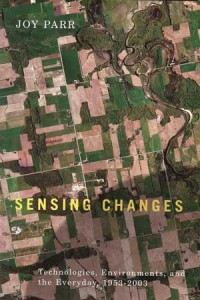
Sensing Changes: Technologies, Environment, and the Everyday, 1953-2003
Joy Parr
University of British Columbia Press
Paperback, 304 pages, $32.95

Sensing_Changes_300Just as all politics can be viewed as local, so, too, can history. Joy Parr’s Sensing Changes: Technologies, Environments, and the Everyday, 1953–2003 (UBC Press, 2010) explores local reactions to a series of “megaprojects,” with a focus on how the residents and workers involved adapted to changing environments, technologies, and everyday experiences often outside of their control. Through seven diverse episodes—ranging from the creation of CFB Gagetown in New Brunswick, the building of the Saint Lawrence Seaway in eastern Ontario, the flooding of the Arrow Lakes in British Columbia, three aspects of Canada’s nuclear program, and the local and provincial response to the e.coli outbreak in Walkerton, Ontario in 2001—Parr seeks to reclaim the vital importance of local, embodied experience in historical research and writing, and, by extension, in political and policy decision-making processes.


Wednesday, 6 March 2013

Quick Thoughts on History Slam #14

I listened to the most recent Active History Slam podcast on my way to work this morning. This month's episode contained an interview with Dr Timothy Stanley of the University of Ottawa. In particular, Sean Graham and Dr Stanley discussed ideas of race and racialization in Canadian history in the context of the Chinese school strike in Victoria, British Columbia in the 1920s.

Racialization is defined by Dr Stanley as: "the social process of inventing race, of marking race...it is fundamentally a process of cultural representation." (c. 8:45) As an example of this, he points out the ways that a racialized category of "black" was defined differently in the United Kingdom (i.e. in the early 19th century, the Irish were considered 'black' and until the 1970s someone from Hong Kong was considered 'black') in comparison to the ways the same term is used in a North American context. (c. 8:20)

This definition of race resonated particularly with me in light of some research I've been doing recently on the "Menno-Cannuck Conflict" that took place in southwestern Manitoba in the late 1870s around the ownership of certain lots near and within the boundaries of the Mennonite Reserve created to promote the immigration of Mennonites from the Russian Empire.

While today we wouldn't use racialized language to categorize the groups, the Dominion Land Agents and other Department of the Interior officials sent to mediate the conflict characterized the two groups in very interesting ways. On the one hand were a number of English speaking settlers from Ontario who were variously categorized as "English-speaking," "Canadian," and "White" settlers. On the other hand were the "German-speaking," "Russian," and "Mennonite" settlers.

(See Library and Archives Canada RG15 Volume 232 File 3129)

 As Dr Stanley argued in his interview, creating categories of the 'other' requires the creation "equally racialized category called 'Canadian.'" (c. 16:05) In this case, the creation of racialized categories of different types of settlers played out on the land in a compromise, the so-called "Menno-Canuck line" that was drawn in red onto the Department of the Interior's maps and translated into lived experience through the relocation of "Canadian" settlers to one side of the line and the concentration of "Mennonite" settlers to the other.

Far from only distinguishing between the Canadians and the Mennonites through their religion or territories of origin, discussions of different ideas of settlement and "improvement" shed light on the ways that the government agents came to know the parties. For example the line drawn on the map acted to separate the more individualistic Canadian homesteads from the more communal Mennonite villages.

(Absent from the records is any discussion of First Nations peoples in this territory, though they briefly note that there wasn't a Métis present prior to the creation of the Mennonite Reserve. Instead, the Department's maps portray the territory as a series of quarter sections either already claimed by one group or the other, or else open for "improvement" by Canadians or Mennonites, depending on which side of the line one looks at.)